
The Language of Ownership: Public vs. Private Corporations in Legal English
This post covers the basic corporate vocabulary based on private versus public corporations. Contact us for more details about courses related to this material.
Eric Froiland
4/16/20262 min read
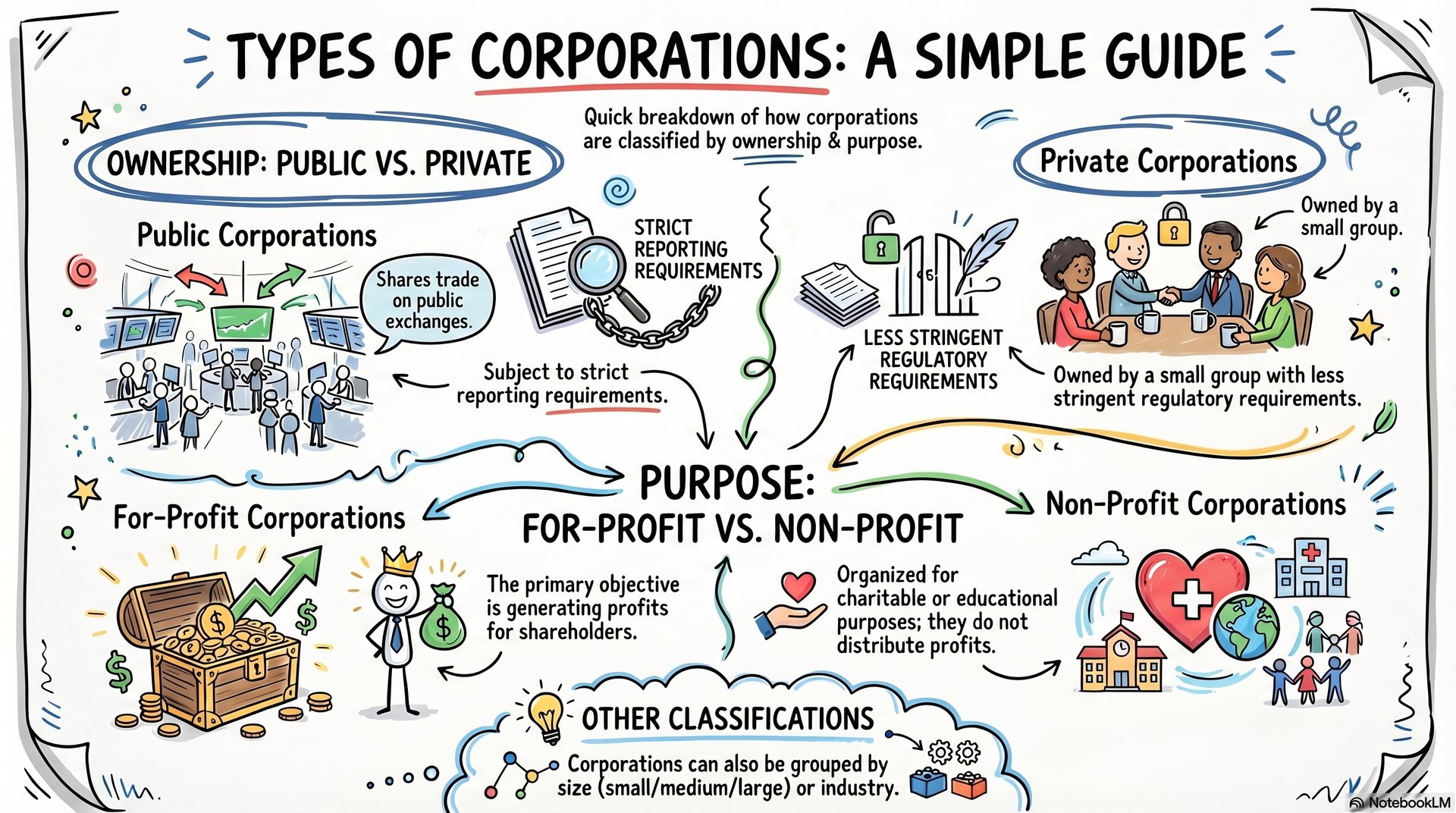
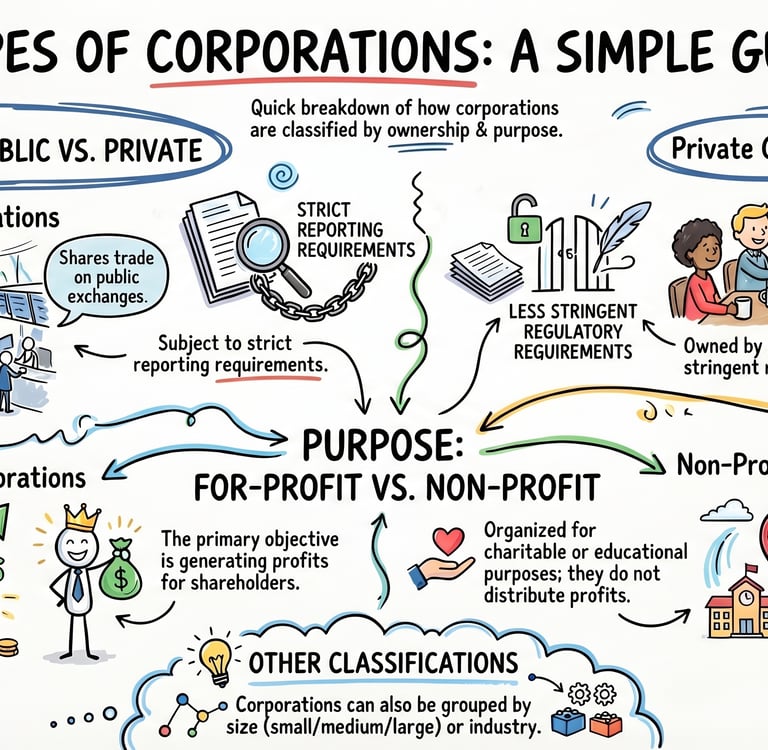
Navigating the global corporate landscape requires more than just business acumen; it demands a precise command of Legal English to distinguish between the two primary pillars of commerce: Public and Private Corporations. While both entities share the foundational characteristic of being a separate legal entity , the linguistic and regulatory landscape changes significantly depending on how they access capital and manage their owners.
The Public Corporation: Transparency and Liquidity
A public corporation is defined by its visibility. In legal terms, its shares are traded on public stock exchanges, making them accessible to the general public. This status brings with it a specialized vocabulary focused on compliance and disclosure. Because these companies invite public investment, they are subject to extensive regulations and stringent reporting requirements.
For a lawyer or business professional, the transition to this status often involves an Initial Public Offering (IPO), a process where a corporation sells shares to the general public for the first time. The primary advantage of a public entity is liquidity, allowing a shareholder to buy or sell their units of ownership with relative ease. However, this comes at the cost of high regulatory scrutiny, as the company must regularly release financial and operational information to maintain transparency.
The Private Corporation: Privacy and Restriction
In contrast, a private corporation operates with much less public interference. Its shares are not publicly traded and are typically held by a small, select group of investors. From a legal documentation perspective, these entities have less stringent regulatory requirements, which allows for greater privacy regarding their internal operations.
While a private status offers more control, it creates an "information gap" for those outside the inner circle. Furthermore, these investments are often illiquid, meaning a shareholder's money might be "locked up" for many years because there is no public market to facilitate a quick sale. In the world of private investing, you will often encounter terms like Angel Investing or Venture Capital, which are frequently restricted to accredited investors—individuals who meet specific high-net-worth or income criteria.
Bridging the Atlantic: UK vs. US Terminology
Precision in Legal English also requires knowing your jurisdiction. In the United Kingdom, a public entity is often a Public Limited Company (PLC), whereas in the United States, the term Corporation (often abbreviated as Inc. or Corp.) is the primary descriptor. Furthermore, while a US company files Articles of Incorporation with a Secretary of State, a UK company submits its foundational documents to Companies House.
Understanding these nuances is the first step toward effective global communication. To master the fiduciary duties, governance vocabulary, and pronunciation needed for the boardroom, join us as we innovate the way lawyers learn.
#LegalEnglish #CorporateLaw #PublicVsPrivate #BusinessEnglish #LegalInnovation #IPO #PLC #Jurisdiction